
A pool finish does not fail all at once. It gets a little rougher at the steps, a stain shows up that never quite leaves, the color goes blotchy in one corner, and one day a piece of finish lets go near the main drain. Most owners notice the change only when someone scrapes a foot or the pool service mentions it.
This guide goes through the signs that a pool interior is near the end of its life, what each one usually means, and which ones point to a bigger problem than the finish. It is written for South Florida pools, which run all year in strong sun and heavy rain, and that combination is hard on any finish.
Rough texture that scrapes feet
A new plaster or aggregate finish is smooth to the touch, apart from the texture built into some aggregate finishes. As the surface wears, the cement paste between the sand or aggregate erodes and the finish starts to feel like sandpaper. Swimmers notice it first on the steps, the benches and the floor of the shallow end, where feet and hands touch most.
Roughness on its own does not mean the shell has a problem. It does mean the surface is wearing away, it will collect algae and dirt more easily, and it will be harder to keep clean. Once kids come out of the pool with scraped toes, most owners decide it is time.
Etching, pitting and a chalky look
Etching looks like a dull, rough, slightly chalky surface, sometimes with small pits. It is usually linked to water chemistry over time, for example water that stays aggressive for long periods and slowly dissolves the surface. Unbalanced water is common in South Florida because heavy rain dilutes the pool and the heat and sun burn through sanitizer quickly.
Mild etching can sometimes be improved by a professional surface treatment, but an interior that is etched across large areas is usually a resurfacing candidate. Ask your pool service for their water records. They help explain what happened and help protect the next finish.
Stains that brushing and treatment will not lift
Pools stain for many reasons: leaves and organic debris, metals from fill water or equipment, and mineral deposits. Many stains can be treated. Stains that keep returning after treatment, or that have worked their way into a worn, porous surface, are a sign the finish itself has reached its limit. A porous finish holds stains in a way a sound finish does not.
Blotchy or faded color
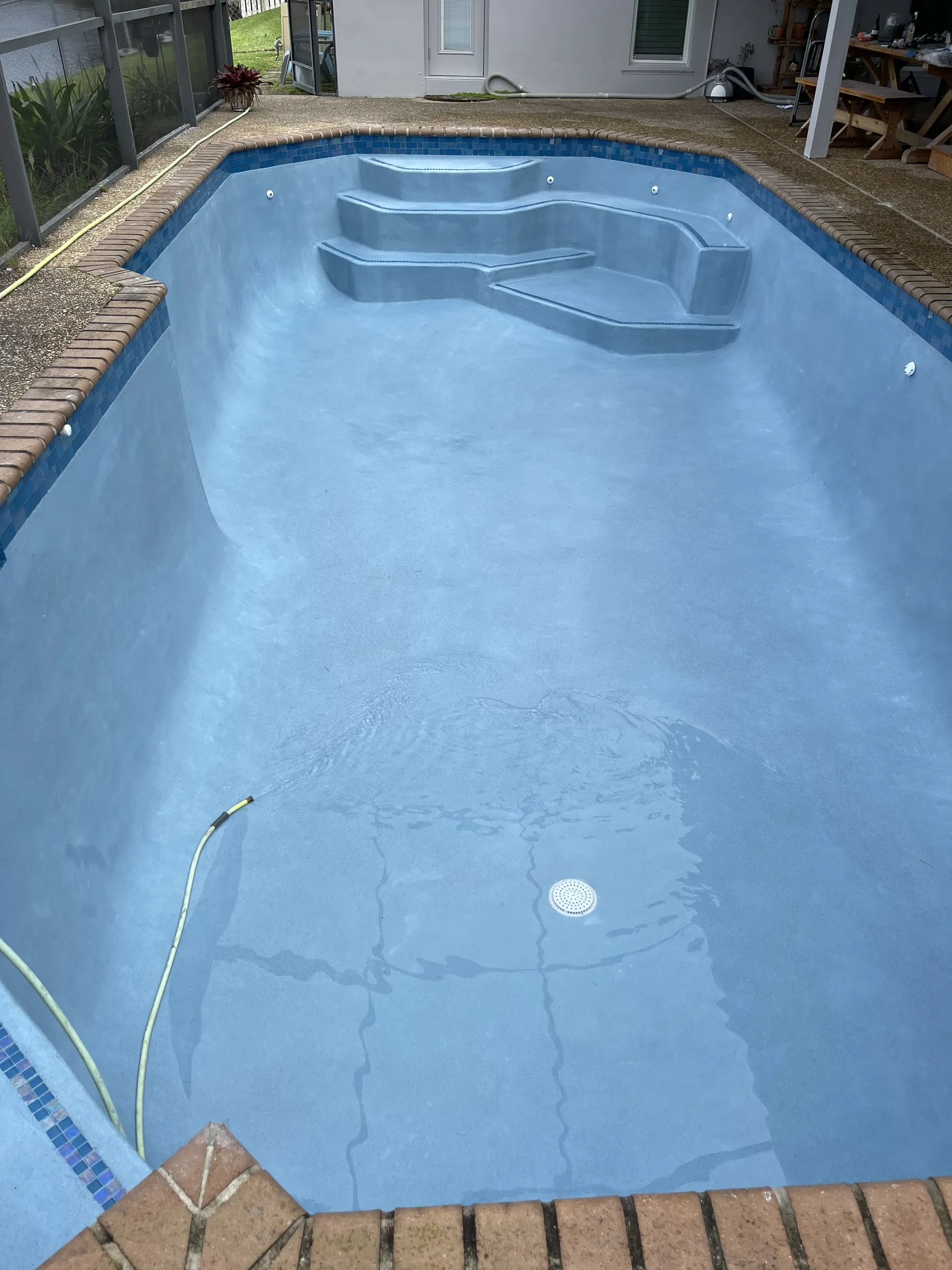
Most finishes fade and change color slowly. Some mottling is normal in plaster. When the color becomes patchy enough to bother you every time you look at the water, or when a dark finish has bleached to a washed-out gray, it is a fair reason to plan a new interior, even if the surface is still sound. It is also the moment to look at the waterline tile and coping, since they will sit right next to the new color.
Hollow spots, flaking and delamination
This is the sign that matters most. Delamination means the finish has separated from the layer behind it. On a drained pool it can show up as an area that sounds hollow when tapped. In a full pool it may show up as finish flaking or peeling away, often at the steps, around fittings, near the main drain or along the tile line.
Once a finish starts letting go, the loose areas tend to spread, and the edges can be sharp. It is not something to leave for years. It also means the preparation for a new finish has to deal with every loose area, not only the visible ones, which is why an on-site assessment matters more than a photo.
Cracks in the finish
Fine surface cracks in the finish, sometimes called check cracks or crazing, are common in plaster and often cosmetic. A crack that runs a long way, that you can catch a fingernail in, that lines up on both sides of a step or a wall, or that has water staining around it, may be more than the finish. Structural cracks in the shell need to be looked at and repaired properly. A new finish over an unrepaired structural crack will usually crack again in the same place.
If you see a crack like that, mention it when you ask for an estimate and send a clear photo with something in the frame for scale.
Water loss you cannot explain
A pool in South Florida loses water to evaporation every day, especially in summer, and gains it in every storm. Water loss that is faster than that, or that continues after the pool and equipment have been checked, can point to a leak in the plumbing, a fitting, a light niche or the shell.
A new finish is not a leak repair. If you suspect a leak, have it found and fixed first, then plan the resurfacing. Tell us about any water loss up front so the scope does not assume the problem away.
Tile and coping problems near the waterline
Loose or missing waterline tile, failing grout and cracked coping are not interior-finish problems, but they usually show up at the same age. They also meet the interior right at the edge where the finish preparation happens. If the tile line needs work, plan it together with the resurface. Our pool tile renovation page explains the options, and pool resurfacing vs remodeling covers how far a project usually needs to reach.
What makes South Florida finishes wear faster
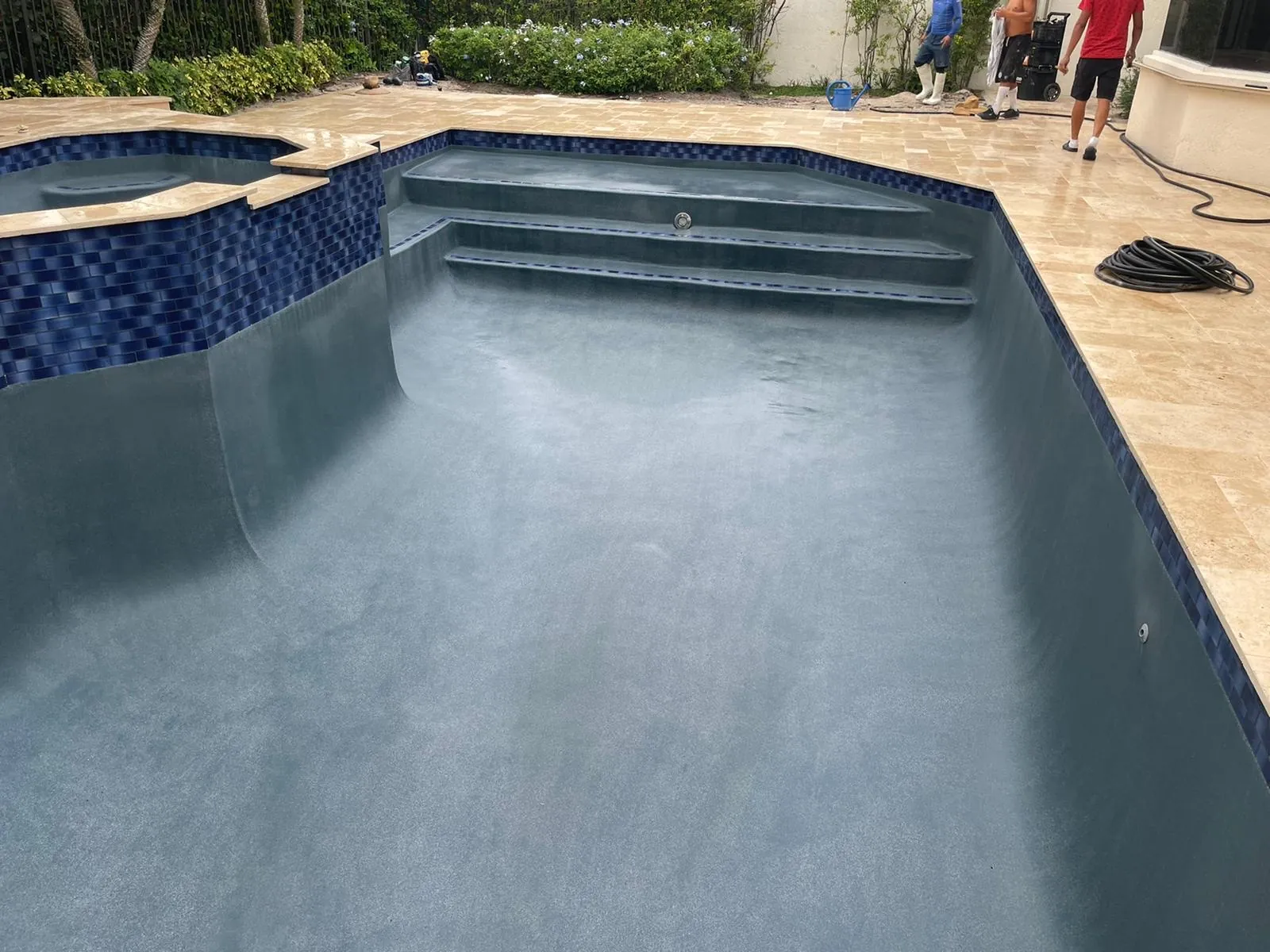
The pool runs every month of the year here, so a finish sees more use and more chemical treatment than in places where pools close for winter. Heavy summer rain dilutes the water and shifts its balance, and the sun burns through chlorine fast. Fill water can carry minerals and metals. Keeping the water balanced is the best thing an owner can do for a finish, new or old.
Groundwater is the other local factor. It sits close to the surface across much of the region, which affects when and how a pool can be drained for resurfacing. That decision belongs to the crew doing the work. Leave the pool full and running until you have project-specific instructions.
What to do next
Take wide photos of the pool from a few sides and close-ups of each problem: rough steps, stains, flaking areas, cracks and the tile line. Note how long each problem has been there and whether it is getting worse. Ask your pool service for any notes they have on water balance or equipment.
Then request a free estimate or call (954) 939-0018. Our pool resurfacing page explains how preparation and finish choices are handled, and the guide to pool renovation cost factors shows what to compare when proposals come in.