
A pool and the deck around it age together, but they rarely fail at the same pace. The interior finish may be rough while the pavers still look fine, or the deck may have settled and cracked while the pool itself is in good shape. Sooner or later most owners face the question of whether to do the pool and deck in one project or one at a time.
There is no single right answer. It depends on the condition of each part, where they meet, and your budget. This guide explains how the two connect, the order the work usually follows, and how to decide whether to combine or phase them on a South Florida property.
Where the pool and the deck meet
The pool and deck share an edge, and that edge is where most of the coordination happens. Starting from the water and moving outward, there is the interior finish, the waterline tile, the coping that caps the pool wall, and then the deck. The coping sits on the pool wall and the deck usually butts up against it, sometimes with a joint between them.
Because of that, work on one side of the edge often disturbs the other. Removing and resetting coping can affect the first row of deck pavers. Lifting an old concrete deck can stress coping that is already loose. Preparing a pool for a new interior finish works right up to the tile line. When people say they want to do the pool now and the deck later, the coping is usually the part that needs a plan.
The usual order of work
When the pool and the deck are done in one project, the work generally moves from the structure outward and from the inside of the pool up to the deck. A typical sequence looks like this.
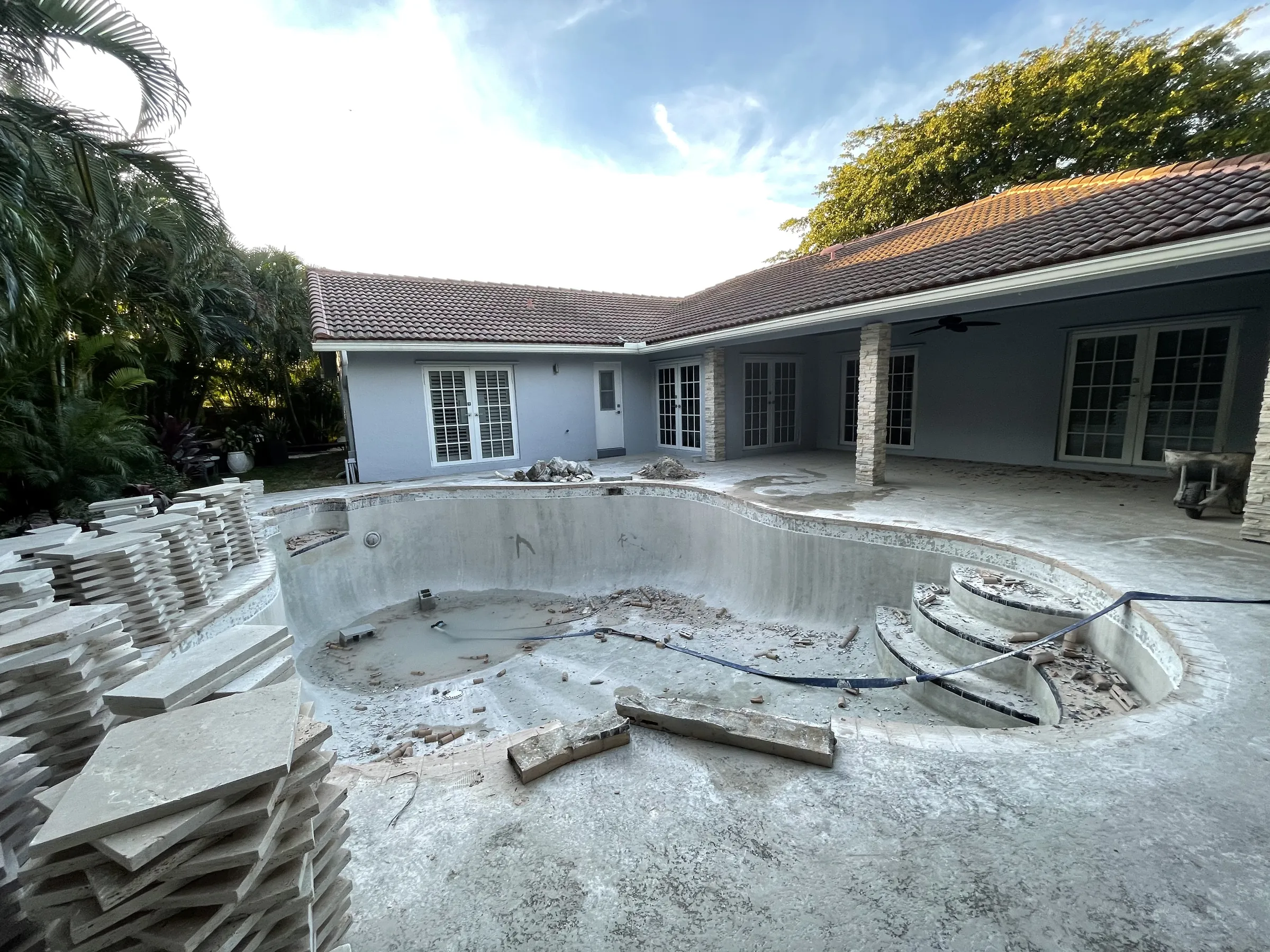
First, anything structural: a spa, a sunshelf, a change of shape, repairs to the shell, and plumbing or equipment changes that go with them. Second, the edge: waterline tile and coping. Third, the deck: removal of the old surface where needed, preparation of the base, drainage and the new surface. Last, the interior finish goes on, the pool is refilled, and the startup routine begins.
Finishing the interior near the end keeps it from being damaged by the heavier work around it. The exact order depends on the materials and the site, and the crew sets it, but if a proposal plans the interior first and the deck demolition afterward, ask why.
Reasons to do both together
The strongest reason is the shared edge. If the coping needs replacing and the deck will be replaced within a few years, doing them together avoids disturbing new coping later.
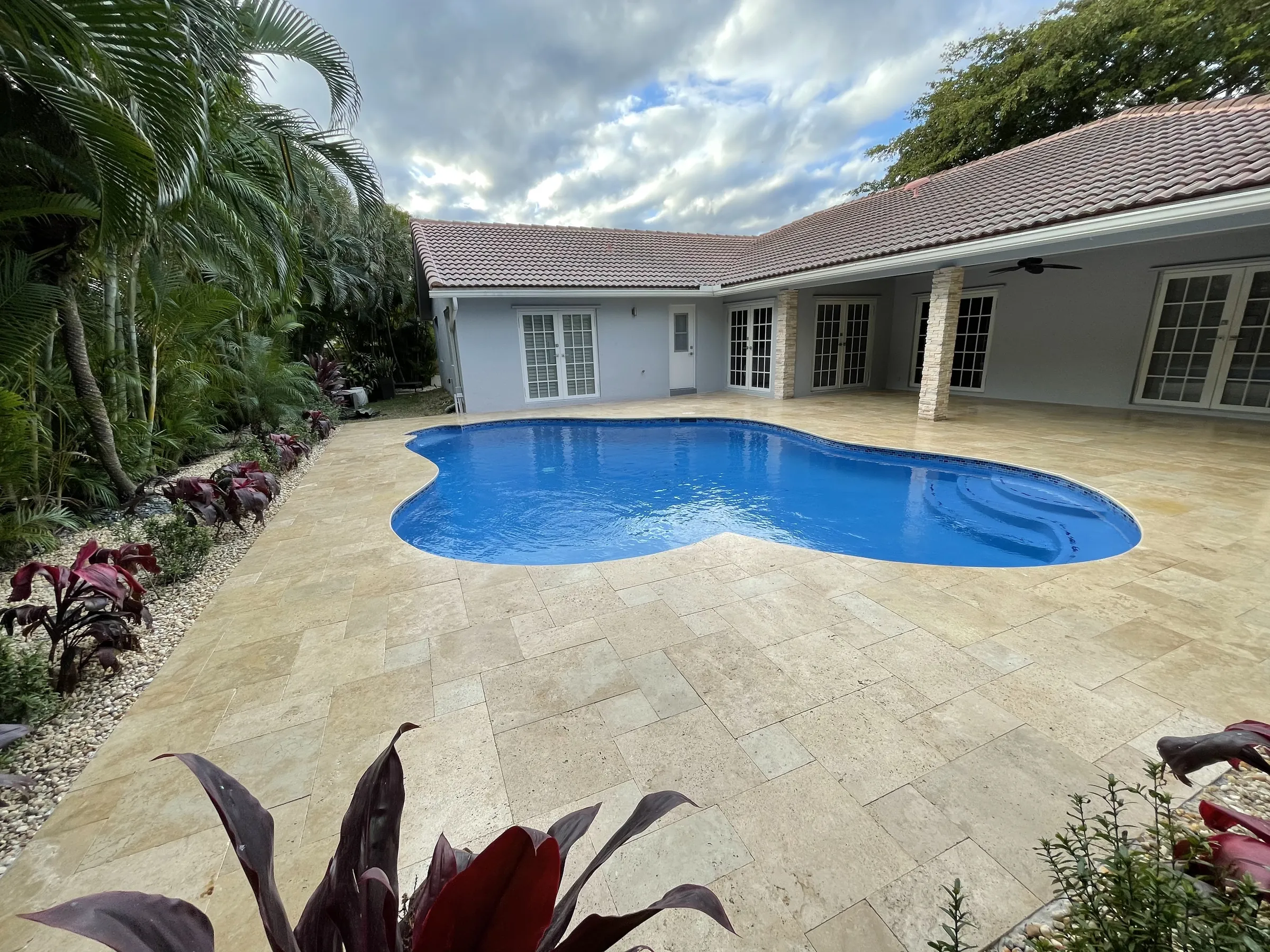
A combined project also lets you choose finish, tile, coping and deck as one palette. The colors and textures sit within a few feet of each other, and choosing them together tends to look more deliberate than matching a new deck to an old pool or the other way around. Our guide to choosing pool finishes and tile goes through that palette.
There is also one disruption instead of two. Equipment, materials and debris move through your side yard once. The backyard is out of use for one stretch rather than two, and if your association requires approval for exterior changes, you submit once.
Reasons to phase the work
Phasing makes sense when one side is in good condition. A deck that is level, drains properly and still suits you does not need to be replaced because the pool is being resurfaced. A sound interior does not need a new finish because the deck is being redone.
Budget is the other common reason. If you phase, deal with safety first. Loose coping, a sharp or flaking finish, and deck sections that have settled into a trip hazard are the items to move up the list. Appearance items can wait.
If you phase, tell the estimator about phase two anyway. The coping detail, the deck height at the pool edge and the drainage can then be planned so the second project fits the first without tearing it up.
Drainage and levels on South Florida decks
Water has to leave the deck quickly in South Florida, where afternoon storms can drop a lot of rain in a short time. A deck should slope away from the pool and the house and send water somewhere it can go. A settled section that holds water, or a deck that drains back toward the pool, is worth fixing during any deck work.
When a new deck surface goes over or replaces an old one, the height can change. That affects the step down from the house, door thresholds, the coping height and the drainage. Ask how the new levels will work at each of those points before you choose a material.
Sun and heat matter too. Some deck materials stay cooler underfoot than others, and some get slippery when wet. Look at samples outside in direct sun, and walk on them wet if you can.
Permits, associations and access
Deck work and structural pool work can involve permits, and the rules depend on your city or county and the scope. A finish-only resurface is often handled differently from a new deck or a spa addition. Confirm which building department covers your address before setting a start date.
Many South Florida communities have an association that reviews exterior changes such as deck materials and colors. Get the rules early and plan the approval into the schedule.
Access is the practical side. Deck removal and new materials need a route through the property, often through a side gate and sometimes through a screen enclosure. Photograph that route when you request an estimate.
How to decide
List what is wrong with the pool and what is wrong with the deck, separately. Mark anything that affects safety. Look at the coping: if it needs work, it pulls the two projects together. Then decide based on condition and budget, knowing the order of work above.
If you are still deciding how far the pool work should go, read pool resurfacing vs remodeling. For the deck side, our backyard and pool deck renovation page explains what we look at, and the pool resurfacing page covers the interior.
When you are ready, request a free estimate or call (954) 939-0018. Send photos of the pool, the deck, the coping and the path into the yard, and tell us whether you are leaning toward one project or two.