
Homeowners call asking for a pool remodel when the plaster is the only thing wrong, and they call asking for a quick resurface when the coping is loose, the tile line is falling off and the deck has sunk at one corner. Both requests are reasonable starting points. The words just mean different amounts of work, and getting the label right early saves you from comparing estimates that price two different projects.
This guide explains what each term covers, how to look at your own pool and sort the problems into the right pile, and when it makes sense to do one now and the other later. It is written for South Florida pools, where sun, rain, groundwater and salt air all play a part in how a pool ages.
What resurfacing covers
Resurfacing replaces the interior finish of the pool, the layer you stand on and see through the water. On most concrete pools here that layer is plaster or an aggregate finish with quartz or pebble in it. Over time it etches, stains, wears thin at the steps and the floor, or lets go of the shell in places. Replastering is the same job when the new layer is plaster.
A resurfacing job usually runs in this order. The pool is drained when the crew judges the ground conditions are right. Loose and failing material comes off, and the surface is prepared so the new finish can bond. The edges around fittings, lights, steps and the tile line get attention. The new finish goes on, the pool is refilled, and the startup routine begins: brushing, water balancing and following the finish maker's instructions for the first weeks.
What resurfacing does not do is change the pool's shape, depth, steps or equipment, or fix a structural crack or a plumbing leak. If the shell or the plumbing has a problem, that needs to be found and dealt with before a new finish goes over it. Our pool resurfacing page covers preparation and finish choices in more detail.
What remodeling covers
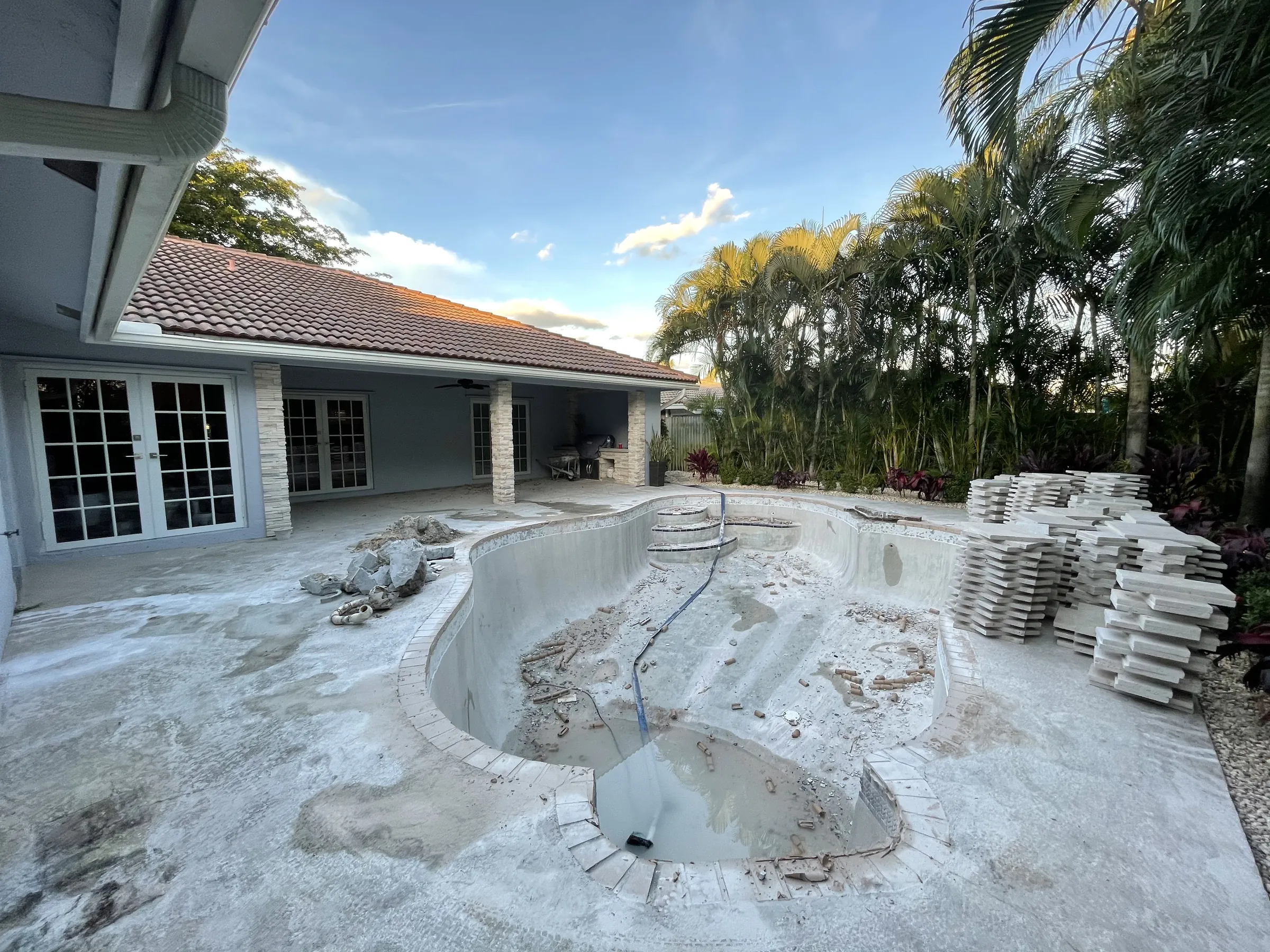
Remodeling is a broader word. It usually starts with a new interior finish and then reaches outward: new waterline tile, new coping, a rebuilt or replaced deck, and sometimes changes to the pool itself. Adding a spa, building a sunshelf for lounging in a few inches of water, or reshaping the pool are all remodeling work.
Once the pool's layout changes, the project picks up steps that a resurface does not have. Structural design and engineering, plumbing changes, possibly new equipment, and building permits for the new work are common. The schedule grows because those items have to be settled in order before construction can start.
A remodel is also where the backyard gets looked at as a whole. The finish, tile band, coping and deck all meet within a few feet of each other, and replacing only one of them can make the others look tired. Our backyard and pool deck renovation page explains how those pieces are planned together.
How to tell which one your pool needs
Walk the pool with a notebook and sort what you see into two lists.
The first list is the interior surface. Rough patches that scrape feet, etching, stains that brushing will not lift, a blotchy color, small hollow-sounding areas when you tap with a knuckle on a drained pool, and finish flaking off at the steps or the main drain. If everything you write down is on this list, resurfacing is probably the job to price first. The guide on signs a pool needs resurfacing goes through each one.
The second list is everything else. Tile coming off the waterline, cracked or loose coping stones, a deck that has settled or cracked, steps that are awkward to use, no shallow area for small children, a wish for a spa, or a pool that feels too big or too small for the yard. Anything on this list points to remodeling work.
Most South Florida pools that are twenty or more years old end up with items on both lists. That is normal. The question then becomes what to do now, what can wait, and how to avoid doing the same work twice.
When doing both at once makes sense
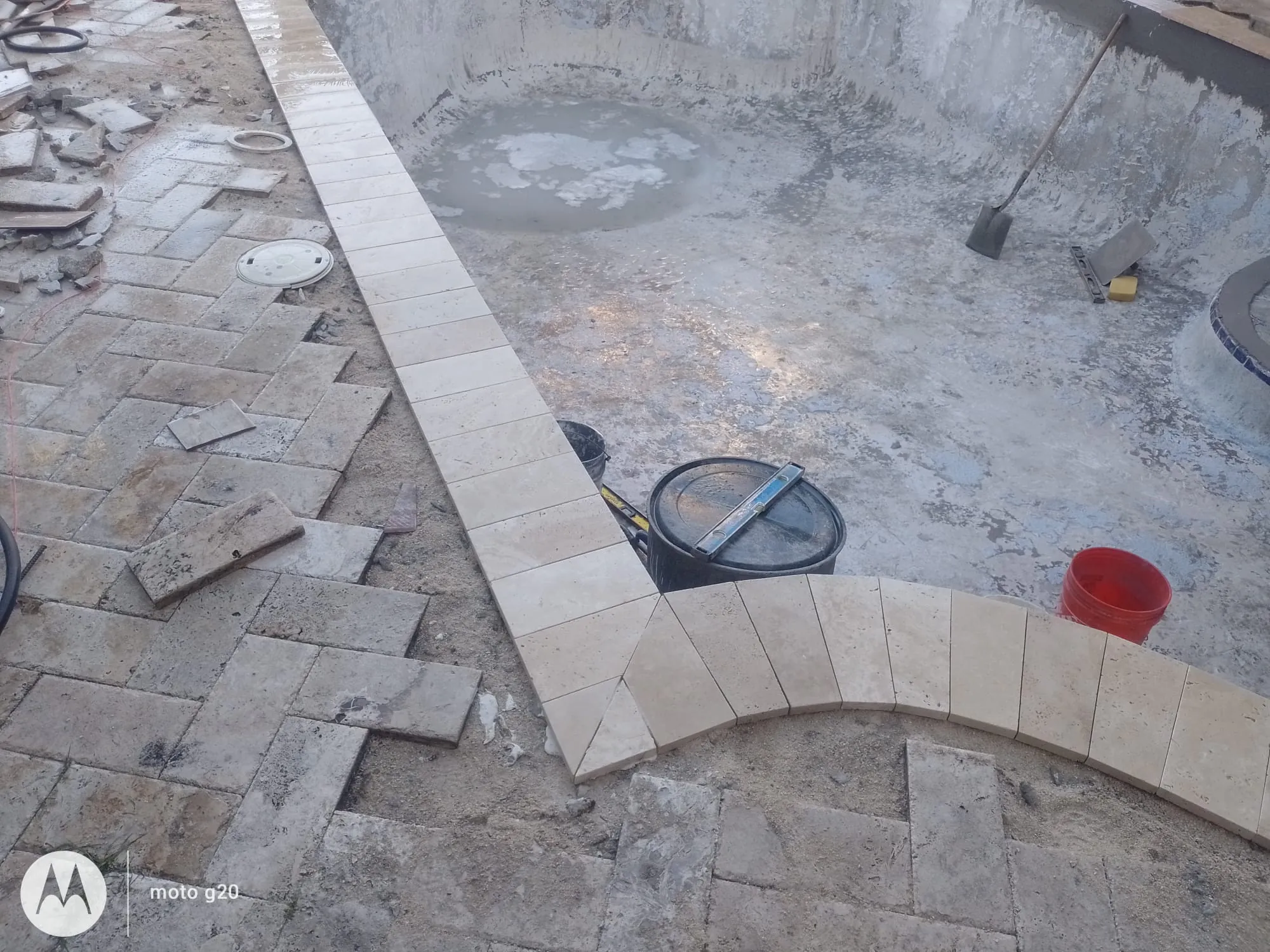
Some work is cheaper and cleaner to do in the same project because it shares a step. Tile and coping are the clearest example. Preparing a pool for a new interior finish involves the area right under the tile line, and new tile or coping work above it touches the same edge. Doing them in separate years can mean disturbing finished work.
Structural changes are the other case. A sunshelf, a spa or a change of shape alters the shell, and the new areas need a finish anyway. Resurfacing the rest of the pool in the same project gives you one consistent interior instead of new and old finish side by side.
If you plan to change the deck within a few years, ask how the coping and deck edge will be handled now. Replacing coping and then lifting the deck around it later can damage the new work.
When it makes sense to phase the work
Phasing is fine when the items do not depend on each other. A sound pool with a worn finish and a deck you are happy with can be resurfaced on its own. A pool with a good interior and failing tile can have the tile line renewed without a full remodel. Tell the estimator about the whole wish list anyway, even the parts you are not ready for. The scope for phase one can then leave room for phase two instead of getting in its way.
Budget is the usual reason to phase. It helps to know which items affect safety and the life of the pool, such as loose coping, sharp finish or a deck that has become a trip hazard, and which ones are about looks. Deal with the first group first.
South Florida details that affect either job
A few local conditions show up on almost every project here.
Groundwater sits close to the surface across much of South Florida, and heavy rain raises it. An empty pool shell can be pushed upward by water in the ground, which is why the crew decides when and how to drain. Do not drain the pool yourself to get ready for an estimate.
The sun is strong all year. Finish color, tile and deck materials should be chosen with that in mind, and so should the startup and water care schedule after a new finish goes in.
Near the coast and along the Intracoastal, salt air works on coping, deck materials and anything metal around the pool. Inland, in places like Weston or Coral Springs, the bigger factors are usually association rules and access through a screen enclosure.
Permits depend on the address and the work. A finish-only job is often treated differently from a structural change, and the city or county building department for your address decides. Many communities also have an association that reviews exterior changes. Raise both early.
What to send before your estimate
Send wide photos of the pool from a few sides, close-ups of the problem areas, a photo of the equipment pad and one of the path into the backyard. Write down your two lists, and mark which items you want done now. Include your city or address and any association rules you know about. You do not need to have picked a finish or tile.
When proposals come back, compare the written scope, not only the total. One contractor may be pricing a resurface while another prices a remodel, and both may be right about your pool. Our guide to pool renovation cost factors lists the questions that make two proposals comparable.
When you are ready, request a free estimate or call (954) 939-0018 and tell us what is on each list. We will help you sort out which work your pool needs and in what order.