
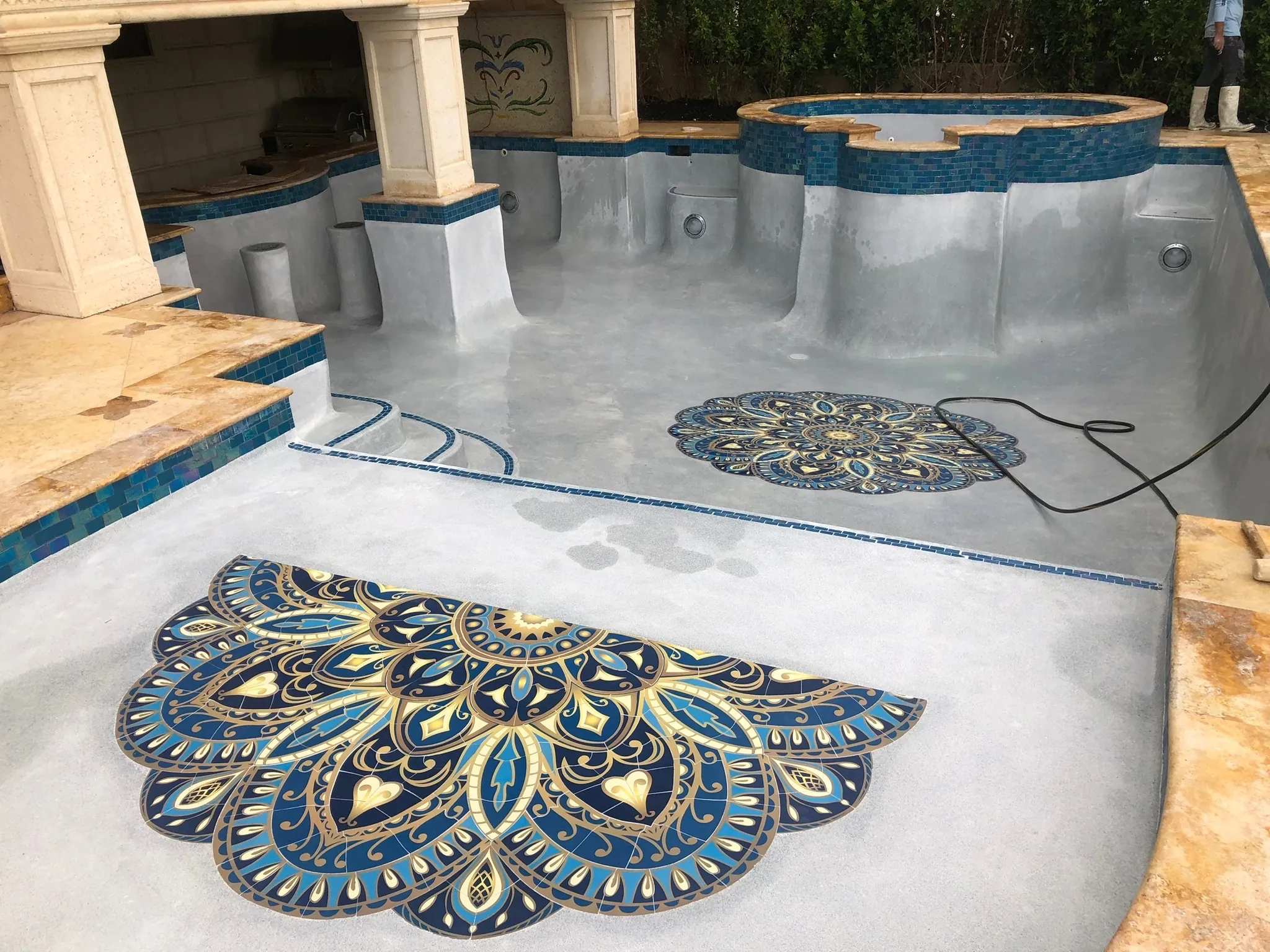
It is easy to collect beautiful pool photographs and still feel unsure about what to choose for your own backyard. The water in one image looks pale turquoise; another looks deep blue. A tile sample that seemed quiet indoors suddenly feels bold in the sun. These differences are part of the selection process, and understanding them can make the choices feel much more manageable.
The best starting point is the overall setting: your house, deck, pool shape, and the way you want the space to feel. Then consider the finish and tile together. This guide is a planning tool for South Florida homeowners, not a specification for a particular product. Availability, suitability, installation details, and care requirements should be confirmed during your project estimate.
Start with the view you live with
Stand where you usually see the pool: from the kitchen, the patio, or a favorite seat outside. Notice which colors already dominate. The exterior walls, paving, landscape, and coping all influence the pool's appearance. A finish that looks impressive by itself may not be the best partner for the materials that will remain.
Choose a small set of reference images and describe what you like about each. It may be the calmness of the water, the contrast at the edge, or the way the tile connects to a spa. That explanation is often more useful than asking to reproduce an entire photograph. It allows the design conversation to respond to your actual property.
Understand why water color varies
A sample is a starting point, not an exact prediction of the view from your patio. Depth, light, surroundings, and the finish itself influence the result. Compare examples with similar pool depth and exposure where possible, and look at the same reference in both sunny and shaded conditions if those images are available.
The National Plasterers Council's interior-finish disclosure explains that pool finishes should be evaluated under water in natural light and that color variation can occur. That is a useful reason to discuss expectations before selecting a finish. Ask what appearance characteristics are normal for the specific product being proposed, rather than relying on a perfectly uniform digital swatch.
Compare texture as well as color
Traditional plaster and aggregate-based finishes can offer different surface experiences. Product categories alone do not tell you exactly how a particular installed finish will feel. If texture matters to you, say so early and ask how the available options compare for the intended use of your pool.
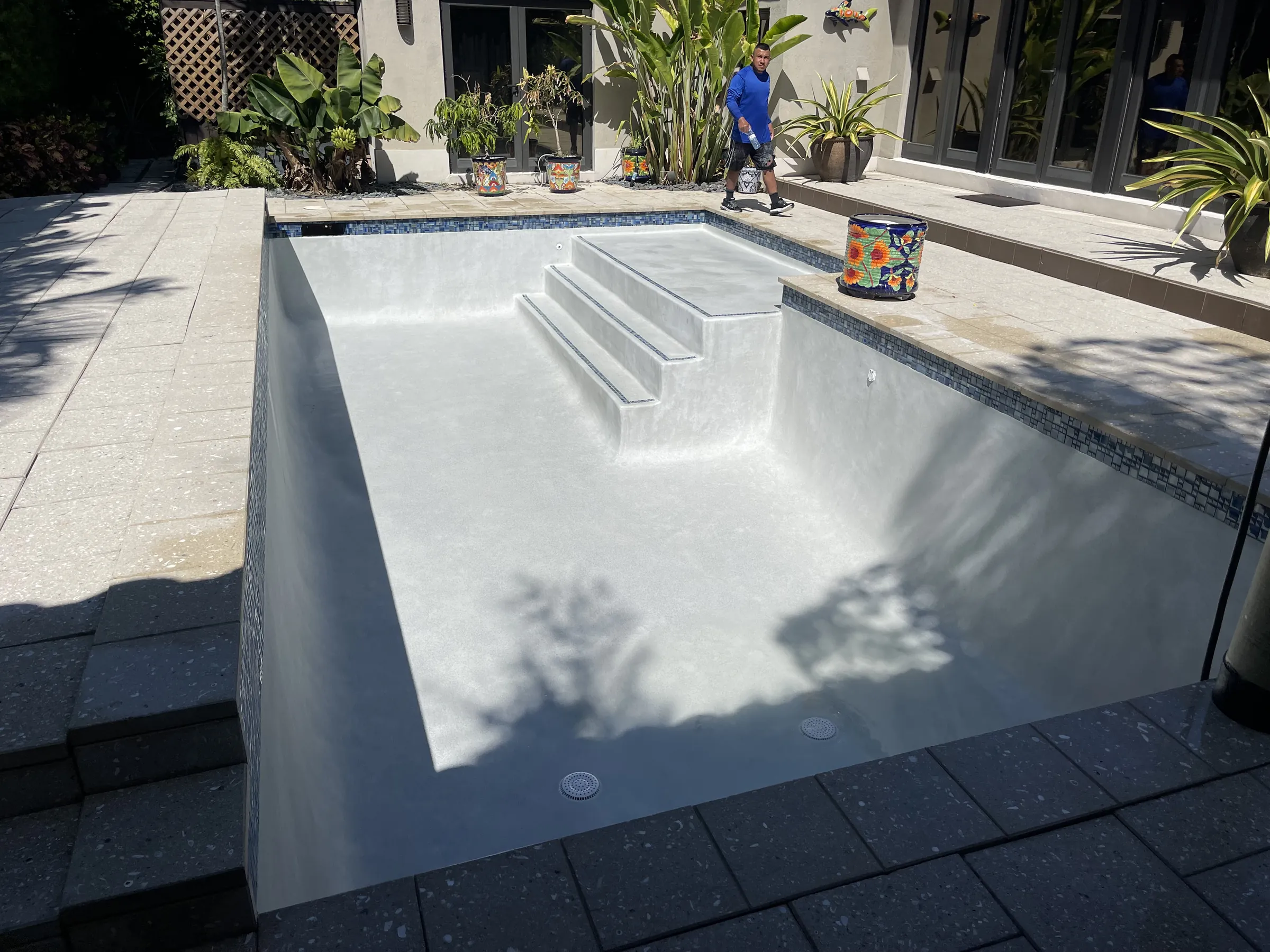
Think about steps, benches, and a possible sunshelf, where people may spend more time in contact with the surface. If you are planning a sunshelf addition, bring that into the material discussion from the beginning. The shallow area should work with the furniture and activities you have in mind, as well as with the deeper interior.
Use the waterline to connect the palette
The waterline is a small band with a large visual effect. It separates the pool water from the coping and deck, and it is visible from many angles. A restrained tile can create a quiet transition. A more expressive choice can become a focal point, particularly around a raised spa or a distinctive pool shape.
Place tile samples next to the proposed finish and coping, not just next to each other. Consider the tone of the house and any deck material that is staying. The goal is to make a coordinated decision. You do not need every material to match, but each should have a reason to be part of the same backyard.
Check the exact tile's intended use
A tile that is appropriate for one setting may not be intended for another. Pool exposure, exterior conditions, and the location within the design all matter. Ask for confirmation that the exact product, setting materials, and grout are suitable for the planned installation. The product name and specifications are more useful than a broad label such as glass or porcelain.
Our pool tile service begins with the existing conditions and the surfaces you want to update. If a tile is loose or a crack returns, replacement should be discussed alongside the condition behind it. Choosing a new color is only one part of making the renovation scope complete.
Think through formats, corners, and grout lines
Tile format influences the rhythm of the finished design. Smaller pieces introduce more joints and detail, while larger pieces may create a calmer pattern. Curves, corners, steps, and spillways can affect how the material is arranged. Ask to understand these transitions before making a final selection based on a flat sample board.
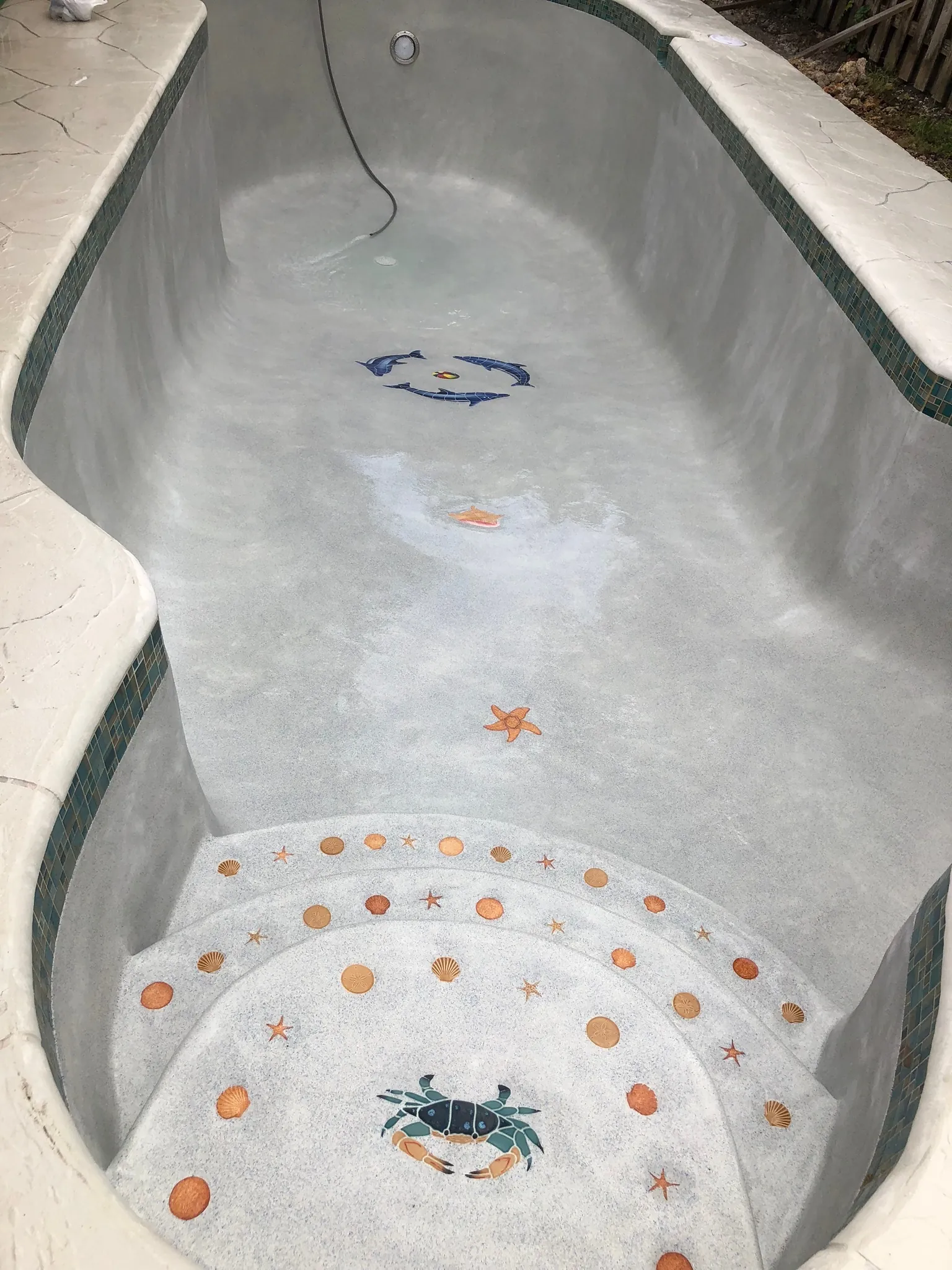
Grout color also changes the impression of a pattern. A close color match can soften the grid; a stronger contrast can emphasize each piece. Ask which options are appropriate for the application and how the installed surface should be maintained. A decision that looks subtle in a hand sample can become more visible over a long waterline.
Keep the surrounding deck in the frame
The deck is a large part of what you see around the pool. Its color, texture, and pattern can either support the water or compete with it. If the deck remains, bring photographs and, where possible, a representative sample into the selection discussion. If it is being replaced, review the entire palette together.
Comfort and care deserve the same attention as appearance. Discuss wet-use suitability, sun exposure, cleaning, and the proposed installation details for deck options. Our backyard and deck renovation service considers those decisions alongside the pool. Avoid selecting a surface solely because it photographs well without understanding how it fits the actual setting.
Ask about maintenance before committing
Every material comes with care expectations. Ask which cleaning methods are appropriate, what your maintenance provider should know, and whether any products or equipment use need to change after the renovation. Written guidance for the selected finish and tile is more useful than general assurances that a material is easy to maintain.
Startup is especially important when the pool interior is renewed. Establish who handles it and how responsibility transfers to regular service. Keep product names and care instructions in your project records. Those details help future maintenance decisions stay connected to the materials actually installed, rather than to assumptions about how the pool was finished.
Make the final selection in context
Before approving materials, review the exact finish, tile, coping, and any deck selections as one group. Ask which items are confirmed and which remain allowances or alternatives. If a product becomes unavailable, discuss a substitute before it is ordered. Similar-looking materials may have different dimensions, care instructions, or installation requirements.
You can begin with a clear direction without having every product selected. Bring your favorite images, the colors you want to keep, and the concerns you want to solve. Request a free estimate from Affordable Pool Renovation to explore a coordinated finish and tile plan for your Boca Raton or South Florida pool. The aim is a backyard that feels considered in everyday use, not only in a photograph.